
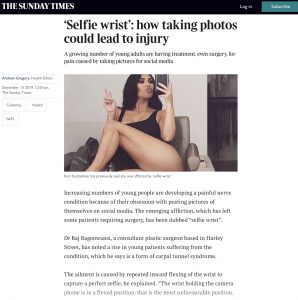
this has recently been described and attributed to excessive use of mobile devices including phones . Although theoretically possible this would be so difficult to prove as other relevant factors would be difficult to control.
this has recently been described and attributed to excessive use of mobile devices including phones . Although theoretically possible this would be so difficult to prove as other relevant factors would be difficult to control.
There is a lot of interest in the relatively new and emerging area of biologics – plasma rich protein (PRP). It has been made ‘fashionable‘ by the likes of Rafael Nadal and Tiger Woods. The healing of damaged, injured or inflamed tissues involves a complex inflammatory / healing response. Platelets release growth factors at the injured site and these are involved in the healing response. PRP is a high concentration of platelets and therefore growth factors which are involved in the healing response.
What is PRP?
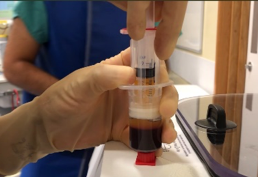
PRP is obtained from the patient by taking a sample of their blood, spinning it down in a centrifuge machine which separates the blood into various components – red cells, white cells and the plasma rich layer. The latter is taken and injected into the patient’s injured region. It contains a high concentration of active platelets which release growth factors involved in the healing of damaged tissues – tendons, ligaments, joints (including degenerative or arthritic joints).
Sample of blood taken from patient
Centrifugation separates blood into different components
PRP (top layer) is taken and injected into damaged tissue
Benefits
The main advantage is that the substance injected is from the patient him/herself so there is a negligible risk of any adverse reaction. It is only as invasive as having a blood test and is a fairly quick procedure done in the outpatient setting usually.
Studies have confirmed the effectiveness of PRP for tennis elbow, jumper’s knee, plantar fasciitis and osteoarthritis of the knee. Studies around the hand and wrist do exist but it is not as well established. Miss Umarji is currently the Chief Investigator for a major study looking at the effectiveness of PRP for base of thumb arthritis.
In many cases surgery can be avoided if PRP is successf
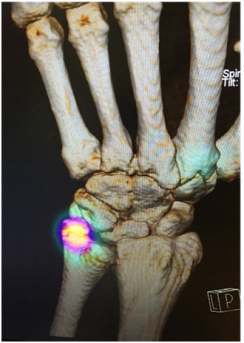
TFCC (triangular fibrocartilaginous complex) tears are relatively common but not all are symptomatic. They can be caused by twisting injuries (tennis players) and present with pain on the ulnar aspect of the wrist.The majority of TFCC tears will not require any surgical treatment and will setlle down with minimal treatment. However a small proportion, depending on the type, will require intervention.The tear is diagnosed clinically and MRI scanning. It can be degenerative (wear/tear related) versus traumatic in nature. The latter are more amenable to surgery although the former may be debrided with success.
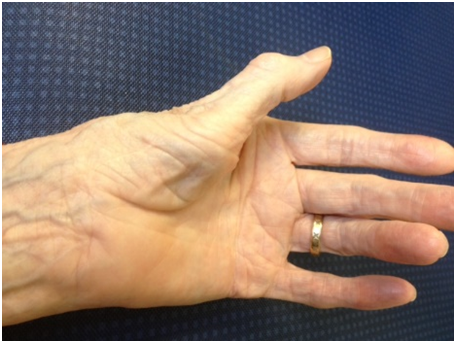
Basal thumb arthritis is a very common condition mainly affecting middle aged women but also men who perform manual tasks. It presents with pain at the base of the thumb and difficultywith everyday tasks such as opening tight jar lids, pain on wringing out a cloth and difficulty holding objects such as a kettle.